
Agentic AI 2026. In the rapid-fire evolution of technology, 2024 was the year of the “Chatbot,” and 2025 was the year of the “Copilot.” But as of March 2, 2026, we have officially entered the era of the Digital Worker.
The novelty of asking an AI to “write an email” or “summarize a PDF” has worn off. In today’s competitive landscape, businesses are no longer looking for tools that require constant human hand-holding. They are looking for Agentic AI—autonomous systems capable of planning, reasoning, and executing complex workflows from start to finish.
If your company is still treating AI as a sophisticated typewriter, you are missing the most significant productivity shift of the decade. Here is the 2026 reality check: your business doesn’t need more tools; it needs digital workers.
1. The 2026 Shift: From “Assist” to “Execute”
The fundamental difference between 2025-era Generative AI and 2026-era Agentic AI is Agency.
- Generative AI (The Tool): Responds to a specific prompt. It is reactive. You provide the “how,” and it provides the “what.”
- Agentic AI (The Worker): Responds to a Goal. It is proactive. You provide the “Objective” (e.g., “Find the top 20 leads in the renewable energy sector and book three discovery calls”), and the agent determines the “How” by using its own internal reasoning and toolset.
In 2026, the market for autonomous agents has surged to over $11.7 billion. We’ve moved past the “Pilot Phase.” Today, 40% of enterprise applications have embedded AI agents that don’t just suggest code or text—they commit it, send it, and monitor the results.
2. Multi-Agent Systems (MAS): The Digital Department
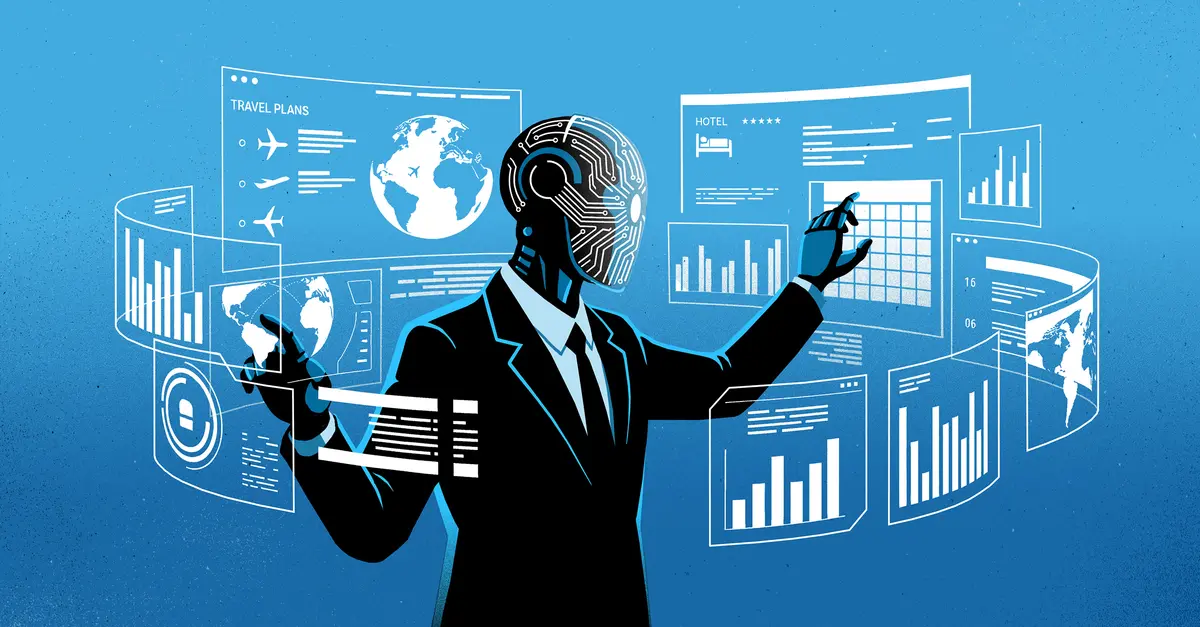
One of the biggest breakthroughs of 2026 is the transition from single, “do-it-all” bots to Multi-Agent Systems. Businesses are now structuring their AI architecture like a human department.
Instead of one monolithic AI, companies are deploying “pods” of specialized agents:
- The Researcher Agent: Scours the web and internal databases for real-time signals.
- The Strategist Agent: Analyzes the data to create a personalized outreach plan.
- The Executor Agent: Drafts and sends communications across LinkedIn, Email, and CRM.
- The Compliance Agent: Acts as a “supervisor,” ensuring every action stays within legal and brand guidelines.
This “Microservices” approach to AI allows for a level of scale that was physically impossible two years ago.
3. Real-World Winners: Who is Using “Workers” Today?
The transition from tools to workers is happening across every major vertical. Here are the 2026 benchmarks for success:
Finance: The Autonomous Auditor
Standard “FinTech” tools used to flag anomalies for humans to check. In 2026, JPMorgan Chase and Wells Fargo are using agentic systems that not only detect fraud but autonomously initiate containment protocols, notify the customer, and file the preliminary regulatory paperwork—all before a human auditor clocks in.
Customer Support: Beyond the Script
Remember the frustrating chatbots of 2024? They are gone. Today’s agents, like those used by Walmart and Amazon, have “Long-Term Memory.” They remember your last five interactions, understand your frustration through sentiment analysis, and have the authorization to issue refunds or reroute shipments without asking for permission.
Software Engineering: The Auto-SDLC
Software engineering has been completely reshaped. Anthropic and GitHub now offer agents that don’t just suggest code snippets; they run “first-pass” drafts of the entire Software Development Lifecycle (SDLC). They write the feature, run the tests, fix their own bugs, and submit a Pull Request. The human engineer has moved from “Builder” to “Architect.”
4. The “Human-on-the-Loop” Model
A common fear in early 2026 was that “Digital Workers” would mean “Zero Humans.” The reality has proven different. We have moved from Human-in-the-loop (where the AI stops at every step for approval) to Human-on-the-loop.
In this model, the AI worker handles the 90% “heavy lifting”—the data entry, the initial outreach, the basic troubleshooting. The human “Manager” steps in only for:
- Strategic Exceptions: High-stakes decisions that require nuanced empathy or ethical judgment.
- Goal Setting: Defining what “Success” looks like for the quarter.
- Governance: Auditing the agent’s “thought process” to ensure alignment with company values.
5. Why Businesses Fail with Agentic AI
While the potential is massive, Gartner warns that 40% of Agentic AI projects risk cancellation by 2027 if they aren’t managed correctly. The most common mistake? Treating an Agent like a Tool.
If you hire a human employee, you don’t give them a 1,000-page manual of every keystroke they need to make. You give them a goal and the authority to use their tools. To succeed with Agentic AI, you must:
- Provide Context, Not Prompts: Give the agent access to your CRM, your Slack history, and your brand voice guidelines.
- Define Clear Guardrails: Don’t limit what they can think, but limit what they can spend or authorize.
- Standardize Protocols: Use 2026 standards like the Model Context Protocol (MCP) to ensure your agents can “talk” to your existing software.
Conclusion: The New Office Hierarchy
By the end of 2026, the competitive advantage will not belong to the company with the best “AI tools.” It will belong to the company with the most efficient AI Workforce.
We are witnessing the birth of a new office hierarchy where your value as a leader is determined by your ability to orchestrate a hybrid team of biological and digital minds. The agents are ready to work. The question is: are you ready to manage them?
About the Author


