
Rebooking Guide. On March 2, 2026, the global aviation map underwent a radical and sudden transformation. Following a series of significant military events in the Middle East, including the confirmed death of Iran’s Supreme Leader, a “no-fly zone” has effectively been draped over some of the world’s most critical transit hubs.
From Dubai (DXB) and Abu Dhabi (AUH) to Doha (DOH), the gateways that usually connect Europe to Asia and Australia are virtually offline for civil aviation.
For the hundreds of thousands of travelers currently holding tickets for a European departure or a connecting flight through the Gulf, the reality is stark: The “Middle East Shortcut” is closed.
If your Europe-bound or Asia-bound flight has been cancelled or redirected, you are not just dealing with a simple delay; you are navigating a complex geopolitical jigsaw puzzle.
This guide provides the most up-to-date rebooking strategies, legal rights under 2026 regulations, and the “alternative corridors” you need to know to get to your destination safely.
1. The 2026 Airspace Crisis: Current Status
As of this morning, global flight tracking systems show a massive “hole” in the flight paths over the Middle East. The escalating conflict has led to the total or partial closure of airspaces in several countries, including the UAE, Qatar, Israel, Iran, and Lebanon.
Hubs Under Pressure
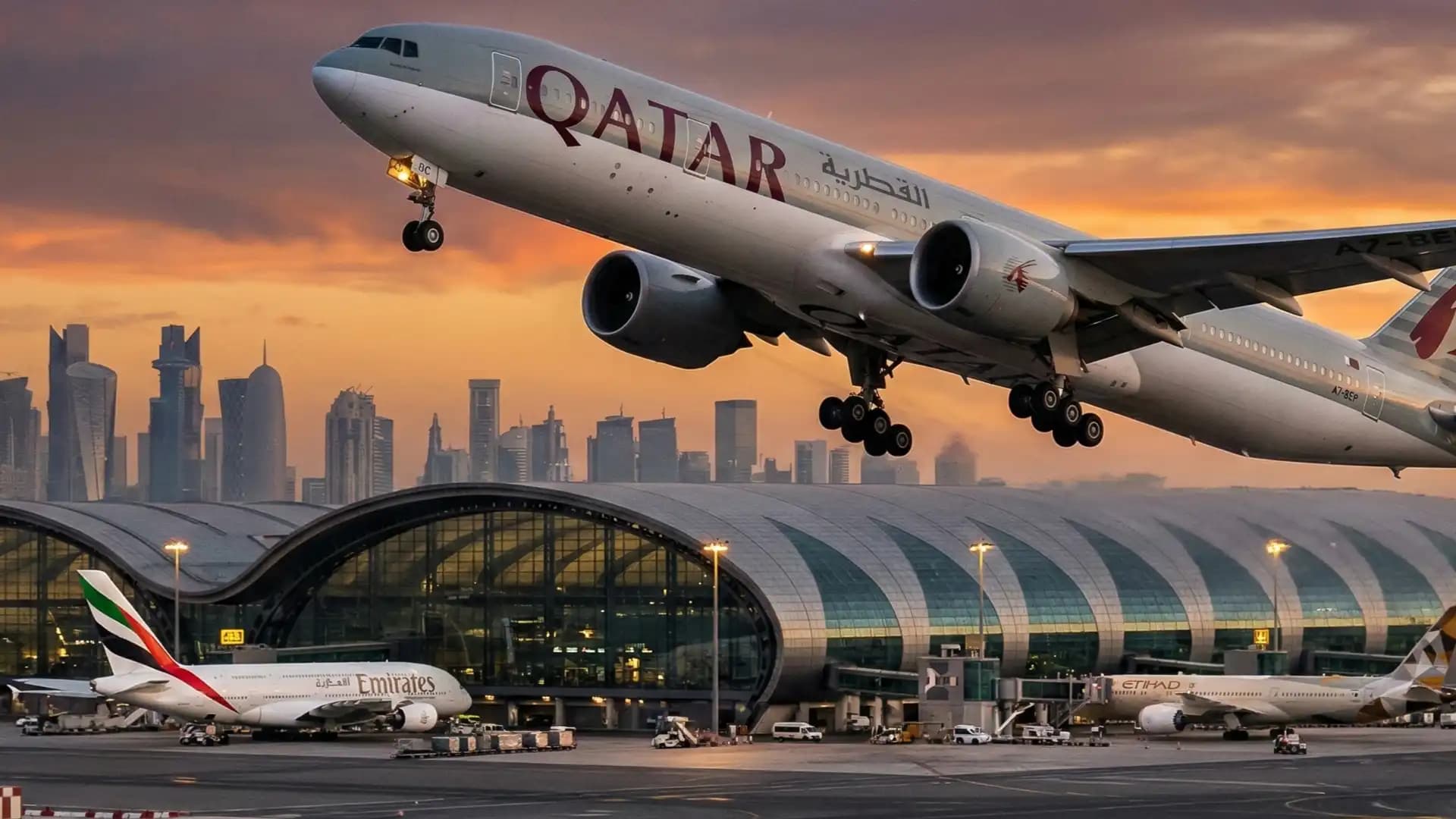
Airlines like Lufthansa, KLM, and ITA Airways have already suspended all services to major hubs like Tel Aviv and Dubai until at least March 8, 2026. Regional giants like Emirates and Qatar Airways are currently grounded or operating at a fraction of their capacity, primarily focusing on clearing a massive backlog of passengers stranded at their respective hubs.
The Impact on European Travel
For travelers in Europe, this means that almost all traditional “one-stop” routes to Australia, New Zealand, India, and Southeast Asia are broken. Airlines are now scrambling to reroute flights over the Mediterranean or through the “Northern Corridor” via Central Asia.
2. Your First Move: Don’t Go to the Airport
The most important advice on March 2, 2026, is: Stay where you are. Major European airports like London Heathrow, Frankfurt, and Paris-CDG are currently experiencing “stand saturation”—meaning there is physically no room for diverted aircraft or the thousands of passengers whose flights have been cancelled.
The 48-Hour Priority Window
Most major airlines have activated emergency rebooking protocols.
- If you travel in the next 48 hours: Use the airline’s dedicated mobile app for the fastest response. Calling the general customer service line may result in wait times exceeding five hours.
- If you travel after 48 hours: Be patient. Systems are automatically processing rebookings for the most urgent cases first. Attempting to rebook a flight scheduled for next week today only clogs the system for those currently stranded mid-journey.

3. Rebooking Strategies: Navigating Alternative Corridors
If you must travel between Europe and the East, you need to look away from the Gulf. In 2026, the most reliable way to bypass the Middle East is to utilize northern routes or the “Great African Bypass.”
The Istanbul Pivot (Turkish Airlines)
Istanbul (IST) sits strategically north of the current primary conflict zones. While Turkish Airlines has suspended flights to the immediate conflict areas, it remains a vital artery for connections to Southeast Asia. Istanbul is currently the busiest “safe” hub for Europe-to-Asia transit.
The Northern/Central Asian Route (Finnair & Air China)
Carriers that utilize northern airspaces are seeing a surge in demand.
- Finnair: Flying via Helsinki (HEL) provides a direct route over the North Pole or Central Asia to Tokyo, Seoul, and Bangkok, avoiding the Middle East entirely.
- Chinese Carriers: Hubs like Shanghai (PVG) and Beijing (PEK) are becoming the most stable transfer points for travelers heading to Europe from Australia. Because they utilize Chinese and Central Asian airspace, they are largely unaffected by the Mediterranean and Gulf closures.
Expect “Technical Stops”
Be prepared for your “direct” flight to include a refueling stop. Many long-haul flights that previously flew over Iran or Iraq are now taking significantly longer paths. For example, Air India has announced that some Europe-to-India flights may include a stop in Rome or Athens to account for the extra fuel needed to fly around the closed zones.
4. Legal Rights: EU 261/2004 (2026 Revision)
If you are flying from a European airport or on a European carrier, you are protected by Regulation (EC) No 261/2004. However, the current situation falls under a specific category.
“Extraordinary Circumstances”
War and sudden airspace closures are legally classified as extraordinary circumstances.
- Compensation: You are likely not entitled to the standard €600 cash compensation for the delay itself, as the cause is beyond the airline’s control.
- Right to Care: The airline is still responsible for your well-being. This includes providing meals, refreshments, and hotel accommodation if you are delayed overnight.
- Re-routing vs. Refund: Under the latest 2026 guidelines, if your flight is cancelled, you have the right to choose between a full refund or a re-routing at the “earliest opportunity.” In 2026, the law allows you to demand re-routing on a competing carrier if your original airline cannot provide a seat within 12 hours.
5. Survival Tips for the 2026 Crisis
- Screenshots are Mandatory: Take screenshots of your original booking, the cancellation notice, and any communication from the airline. If you have to pay for your own hotel because the airline is “overwhelmed,” you will need these for your reimbursement claim.
- Travel Insurance Check: Standard travel insurance typically excludes war-related cancellations. However, if you have Cancel For Any Reason (CFAR) or Interruption For Any Reason (IFAR) riders, now is the time to activate them.
- Monitor “Digital Visas”: Many countries in Southeast Asia have updated their digital arrival cards (TDAC). If your re-routed flight arrives 24 hours late, ensure your digital entry permit is still valid.
Conclusion: Flexibility is Your Best Asset
The 2026 Middle East airspace closure is the single largest disruption to global aviation since the 2010 ash cloud. To get to your destination, you must be prepared to fly “backwards”—going north to go east or west. Avoid the Gulf hubs for at least the next 10 days and prioritize carriers that fly northern routes through Helsinki, Istanbul, or Beijing.
About the Author


