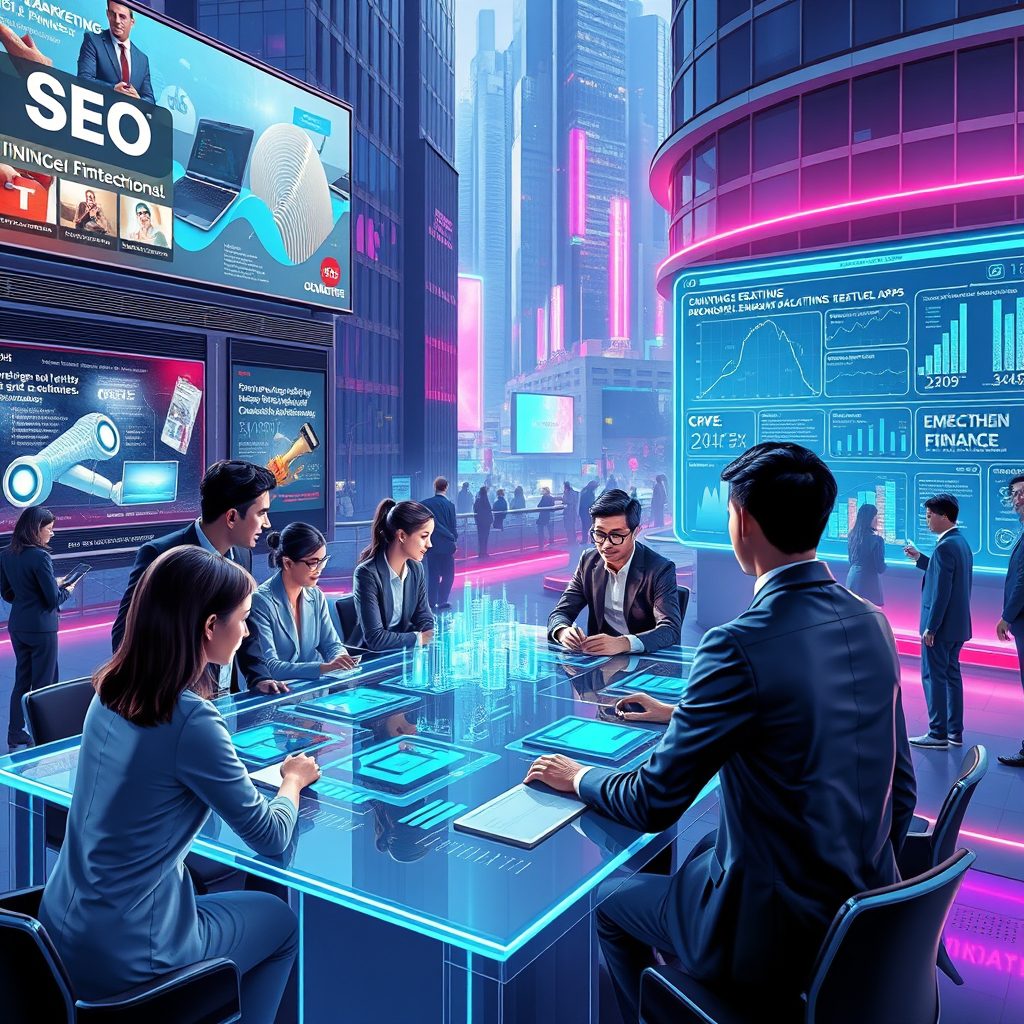
The intersection of Digital Marketing & SEO, Finance & Fintech, and Creative & Marketing for 2026 is redefining how businesses engage with consumers, optimize growth, and stay ahead of the curve. As technology evolves at an unprecedented pace, companies must adapt their strategies to leverage emerging trends, data-driven insights, and innovative tools.
By 2026, these three pillars will not only coexist but also amplify each other, creating a dynamic ecosystem where finance meets creativity, and marketing thrives on precision. Understanding this convergence is essential for businesses aiming to future-proof their operations and capitalize on new opportunities.
Furthermore, the rapid digitization of financial services is blurring the lines between traditional banking and cutting-edge fintech solutions. Consumers now expect seamless, personalized experiences, whether they’re applying for a loan, investing in stocks, or managing their daily expenses. Meanwhile, digital marketing and SEO are evolving to meet these demands, using AI-driven analytics and hyper-targeted campaigns to reach audiences with unprecedented accuracy. Creative strategies, too, are becoming more data-informed, ensuring that every campaign resonates with the right audience at the right time.
Why Digital Marketing & SEO Are the Backbone of Modern Business Growth
Digital Marketing & SEO have become indispensable for businesses looking to expand their reach and drive sustainable growth. In 2024, over 68% of online experiences begin with a search engine, making SEO a critical component of any marketing strategy. By 2026, this trend will only intensify as voice search, AI-powered assistants, and visual search technologies become mainstream. Companies that fail to optimize their content for these emerging search methods risk falling behind competitors who embrace innovation.
Next, the role of content marketing in SEO cannot be overstated. High-quality, engaging content not only improves search rankings but also builds trust and authority in a brand. Businesses that invest in long-form content, interactive media, and user-generated campaigns see a 30% higher conversion rate compared to those relying on traditional advertising alone. Furthermore, the integration of AI tools like natural language processing (NLP) and predictive analytics allows marketers to craft content that aligns perfectly with user intent, ensuring higher engagement and lower bounce rates.
However, SEO is no longer just about keywords and backlinks. The rise of E-E-A-T (Experience, Expertise, Authoritativeness, and Trustworthiness) as a ranking factor means businesses must prioritize credibility and transparency. Google’s algorithms now favor websites that demonstrate real-world expertise, particularly in finance and fintech, where misinformation can have serious consequences. In addition, local SEO is gaining traction as consumers increasingly search for nearby services, making it essential for businesses to optimize their Google My Business profiles and local citations.
How Can Businesses Leverage AI for Smarter SEO Strategies?
Artificial intelligence is revolutionizing Digital Marketing & SEO by automating tasks, uncovering insights, and personalizing user experiences. For instance, AI-powered tools can analyze vast amounts of data to identify trending topics, predict keyword performance, and even generate content outlines. By 2026, 80% of digital marketers are expected to use AI in some capacity, with many adopting it for real-time SEO adjustments. This shift allows businesses to stay agile, responding to algorithm updates and consumer behavior changes faster than ever before.
Moreover, AI-driven chatbots and virtual assistants are enhancing customer interactions, providing instant support and guiding users through the sales funnel. These tools not only improve user experience but also gather valuable data that can be used to refine SEO strategies. For example, chatbot conversations can reveal common pain points or frequently asked questions, which businesses can then address in their content. This proactive approach not only boosts SEO but also fosters stronger customer relationships.
Finance & Fintech: The Digital Revolution Transforming Consumer Behavior
The Finance & Fintech sector is undergoing a seismic shift, driven by technological advancements and changing consumer expectations. By 2026, the global fintech market is projected to reach $324 billion, with digital payments, blockchain, and decentralized finance (DeFi) leading the charge. Consumers are increasingly turning to mobile banking, digital wallets, and peer-to-peer lending platforms, demanding faster, more secure, and more transparent financial services.
In addition, the rise of embedded finance is blurring the lines between financial services and other industries. Retailers, tech companies, and even social media platforms are now offering financial products like buy-now-pay-later (BNPL) options, micro-investing, and insurance. This trend is creating new opportunities for businesses to integrate fintech solutions into their existing offerings, enhancing customer loyalty and driving revenue growth. For example, a retail brand that partners with a fintech provider to offer instant credit at checkout can see a 20% increase in average order value.
However, the rapid growth of fintech also presents challenges, particularly in the areas of cybersecurity and regulatory compliance. As financial transactions become more digitized, the risk of fraud and data breaches increases. Businesses must invest in robust security measures, such as biometric authentication and encryption, to protect sensitive customer information. Furthermore, staying compliant with evolving regulations, such as GDPR and the California Consumer Privacy Act (CCPA), is essential to avoid hefty fines and reputational damage.
What Role Does Blockchain Play in the Future of Finance & Fintech?
Blockchain technology is poised to revolutionize Finance & Fintech by enhancing security, transparency, and efficiency. Unlike traditional banking systems, which rely on centralized authorities, blockchain operates on a decentralized network, reducing the risk of fraud and human error. By 2026, blockchain is expected to process over $10 trillion in transactions annually, with applications ranging from cross-border payments to smart contracts and digital identity verification.
Smart contracts, in particular, are gaining traction as a way to automate financial agreements without the need for intermediaries. These self-executing contracts are stored on the blockchain, ensuring that all parties adhere to the terms and conditions. For businesses, this means faster transactions, lower costs, and reduced legal disputes. In addition, blockchain’s immutability makes it an ideal solution for auditing and compliance, as every transaction is recorded and cannot be altered.
Furthermore, the rise of central bank digital currencies (CBDCs) is set to transform the global financial landscape. Countries like the United States, China, and the European Union are already exploring the development of their own digital currencies, which could streamline payments and reduce reliance on traditional banking systems. For businesses, this shift presents both opportunities and challenges, as they must adapt to new payment methods and regulatory frameworks.
Creative & Marketing for 2026: How to Stay Ahead in a Competitive Landscape
As we approach 2026, Creative & Marketing strategies must evolve to keep pace with changing consumer behaviors and technological advancements. The days of one-size-fits-all campaigns are long gone; today’s audiences expect personalized, immersive experiences that resonate with their unique preferences. Brands that fail to adapt risk losing relevance in an increasingly crowded marketplace, where attention spans are shorter and competition is fiercer than ever.
One of the most significant trends shaping Creative & Marketing for 2026 is the rise of short-form video content. Platforms like TikTok, Instagram Reels, and YouTube Shorts have revolutionized how brands engage with audiences, with 68% of consumers preferring video over text-based content. Businesses that leverage these platforms can see a 40% increase in engagement, as video content is more likely to be shared and remembered. Furthermore, the integration of augmented reality (AR) and virtual reality (VR) into marketing campaigns is creating new opportunities for interactive storytelling, allowing brands to create memorable experiences that drive conversions.
In addition, influencer marketing continues to be a powerful tool for reaching niche audiences. However, the landscape is shifting from macro-influencers to micro and nano-influencers, who offer higher engagement rates and more authentic connections with their followers. By 2026, 70% of marketers plan to increase their influencer marketing budgets, focusing on long-term partnerships rather than one-off collaborations. This approach not only builds trust but also ensures consistency in brand messaging.
How Can Data-Driven Creativity Enhance Marketing Campaigns?
Data-driven creativity is the future of marketing, as it allows businesses to craft campaigns that are both innovative and effective. By analyzing consumer data, marketers can identify trends, preferences, and pain points, enabling them to create content that resonates on a deeper level. For example, AI-powered tools can analyze social media conversations to uncover emerging topics, which brands can then incorporate into their campaigns. This approach ensures that marketing efforts are relevant, timely, and aligned with consumer interests.
Moreover, dynamic creative optimization (DCO) is transforming how ads are delivered to audiences. DCO uses real-time data to customize ad creatives based on factors like location, device, and browsing history. This level of personalization can increase click-through rates by up to 50%, as consumers are more likely to engage with content that feels tailored to their needs. In addition, A/B testing and multivariate testing allow marketers to refine their campaigns continuously, ensuring optimal performance and ROI.
However, the key to successful data-driven creativity lies in striking the right balance between automation and human insight. While AI can process vast amounts of data, it’s the human touch that brings creativity and emotional resonance to marketing campaigns. Brands that combine data-driven insights with compelling storytelling will stand out in 2026, capturing the hearts and minds of their audiences.
FAQ: Addressing Key Questions About Digital Marketing, Fintech, and Creative Strategies
What Are the Top Digital Marketing & SEO Trends to Watch in 2026?
In 2026, Digital Marketing & SEO will be shaped by several key trends, including the rise of voice and visual search, the growing importance of E-E-A-T, and the integration of AI into content creation and optimization. Voice search is expected to account for 50% of all searches by 2026, making it essential for businesses to optimize their content for natural language queries. Additionally, AI-powered tools will enable marketers to analyze user intent more accurately, ensuring that content aligns with what audiences are searching for. Local SEO will also continue to grow in importance, as consumers increasingly rely on mobile devices to find nearby services.
How Is Fintech Changing the Way Consumers Manage Their Finances?
Fintech is revolutionizing how consumers manage their finances by offering faster, more convenient, and more secure alternatives to traditional banking. By 2026, digital wallets are expected to account for 52% of all e-commerce transactions, as consumers embrace the ease of mobile payments. Furthermore, fintech solutions like robo-advisors and micro-investing platforms are making financial planning and investing more accessible to the average consumer. The rise of embedded finance is also enabling non-financial businesses to offer financial products, such as BNPL options and insurance, directly within their platforms. This shift is empowering consumers to take control of their financial futures like never before.
What Creative Strategies Will Dominate Marketing in 2026?
In 2026, Creative & Marketing strategies will be dominated by short-form video content, influencer marketing, and immersive technologies like AR and VR. Short-form video platforms like TikTok and Instagram Reels will continue to drive engagement, with brands leveraging these channels to create authentic, relatable content. Influencer marketing will shift toward micro and nano-influencers, who offer higher engagement rates and more genuine connections with their audiences. Additionally, AR and VR will enable brands to create interactive experiences that captivate consumers and drive conversions. Data-driven creativity will also play a crucial role, as marketers use AI and analytics to craft campaigns that resonate with their target audiences.
As we look ahead to 2026, the convergence of Digital Marketing & SEO, Finance & Fintech, and Creative & Marketing strategies will create a landscape of endless possibilities. Businesses that embrace innovation, prioritize data-driven decision-making, and stay agile will thrive in this dynamic environment. The future belongs to those who can adapt, evolve, and connect with their audiences in meaningful ways, ensuring long-term success in an ever-changing world.
About the Author


